One of the most overwhelming times I can remember (or not remember, some of it is a blur!) is when I had three kids under three and we were selling our house. It took 13 opens before we sold our place and keeping a house ready for open inspections with little people and two dogs is no joke! A lot of my life at that time was in survival mode. However gardening was such an important part of my life that I had to figure out ways to put my hands into the soil in the margins of time between tasks.
When the house is a mess, we’re behind with the washing and everyone wants a snack it’s hard to imagine taking the time to get out into the garden. Yet research supports so many health benefits of growing our own food (click here to read more about the health benefits of gardening). Want to start growing some of your own food or spend more time in the garden but not sure how to fit it into your very full schedule? Read on for some ideas.
- Set a Timer.
It’s overwhelming when there’s lots of tasks to get done in the garden and it can make it feel too hard to even start. When we know that we won’t be able to get it all done it can be easy not to even begin.
We set a timer for ten minutes and do as much as we can in that time. Having a timer running makes me garden much faster and more focused because I know I have such a limited amount of time. When the timer goes I have achieved my goal – ten minutes spent on the garden in some way. Another fun way to do this is to put three to four songs on a play list – at the end of the fourth song that’s when we stop gardening! We may not get everything achieved in the garden that we were hoping to, but if the goal was to garden for ten minutes and we’ve achieved that then there’s something to be proud of.
- Choose one small area to work on.
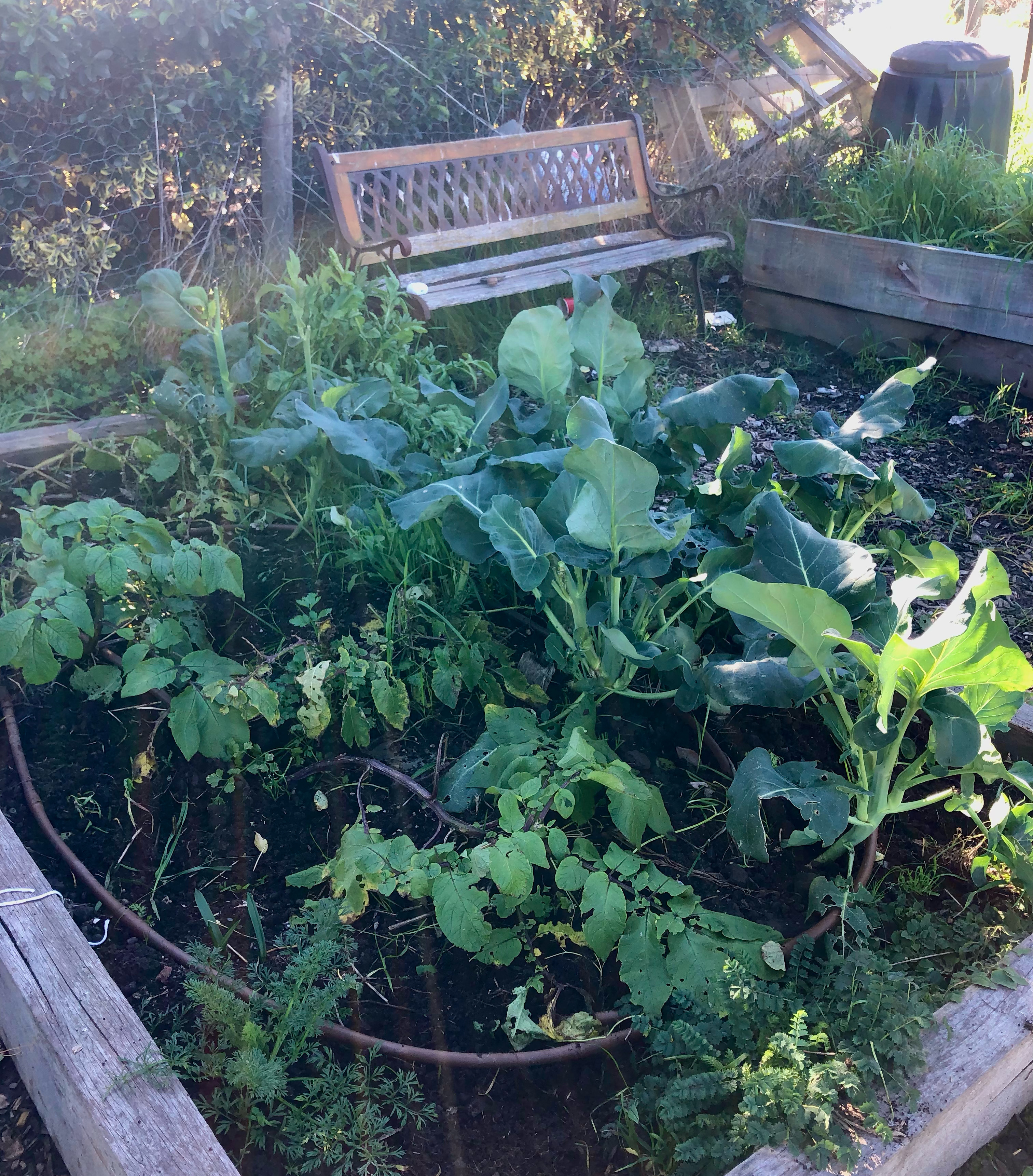
The whole garden may be too much to handle right now – but perhaps a specific section is more achievable. When my husband and I built our first house and moved in, the front and back yard were nothing but mud – or dust on hot days. My Mum, an experienced gardener, encouraged me to utilise a half wine barrel that I already owned and focus my gardening efforts on that until we could put some more specific landscaping plans such as paths and retaining walls in place. I planted a climbing jasmine with a bamboo climbing frame and some little violas in that half wine barrel and tended it each day. The clearly defined physical boundaries helped me to focus and not get overwhelmed by my desire to do all the gardening at once – and then more likely none of it. If we’re gardening in-ground, we can lay a stick or some timber sleepers down to mark the area you’re going to focus on and just work on getting that small section looking nice. We can also identify a naturally defined area, such as the small rectangular garden between between the house and the shed. It feels better to have one area tidy and growing well than to do little bits all over the yard and not be able to see significant progress in one zone.
When we moved to our house on five acres I wanted to grow much of our own fruit and vegetables and had plenty of huge potager gardens on my Pinterest boards but my children were still very small and we had limited time and money to work with. I fenced off the area that I knew I eventually wanted to build up to a productive vegetable patch but I built one rectangular raised garden bed with hardwood sleeper edges to focus on. I now have eight raised beds and a number of border gardens in that same fenced off area but that has increased over the years as my capacity has grown and my original garden beds have become more established. It is better to start with a small garden area and manage it well than to try and do it all at once and nothing looks cared for.
- Use seedlings, not seeds.
When I’m in an overwhelming season, planting seedlings gives me a quick win for a low price. Seedlings are less fragile than growing from seed and I can see my progress more clearly. It is easy to see where to water and planting seedlings with a root system saves me a few weeks of growing time.
When I have the time I do prefer to grow plants from seed because there are lots of heirloom varieties that I want to try and it is even more cost effective. However, when I’m in an overwhelming season and growing my own seedlings is not an option, seedlings from a reputable plant nursery help me to get started in my garden and still grow my own quality produce or flowers. A neat little row or swirl of seedlings with their leaves swaying in the breeze is such an encouraging sight after spending a little block of time in the garden.
- Put your focus on the garden closest to the door.
Permaculture (a values based system of gardening) encourages us to focus on zone one, the parts of our garden closest to the front or back door of the house. When I had my fourth child and was spending a great deal of time nursing and caring for the baby, I planted two medium sized pots right by the front door with heirloom lettuce. Each day I would tweak a couple of leaves off to pop in my salad or a bread roll. This was a fun and easy way to grow a few delicious fresh greens when it seemed too overwhelming to walk out to the actual vegetable garden.
If possible, it is best to grow plants on the north or east side of the house so there is sufficient sunshine and shelter from the hot late afternoon sun in summer. Facebook marketplace is a good place to look for second-hand pots or planters to put by the door or raised garden bed kits.
- Have a reset time for the house
The reality is, it’s not always possible to have a spotlessly clean house and make plenty of time to be out in the garden. We have two main ‘reset’ times at our house, one after the breakfast rush and one around 3 pm. After breakfast I put on a load of washing, pack away the breakfast things and do a general quick pick up if needed. As the children get older they have little chores to contribute to this such as helping unpack the dishwasher and making their beds. This gives me a portion of time to get into the garden throughout the day in little pockets of spare time between tasks. About 3 pm we do another clean up, pack the dishwasher, do a quick sweep of the hard floor areas and put away the items that have accumulated over the day. Knowing that there are two main times in the day where the house will get put back to some semblance of order gives me license to do a few more things in the garden guilt free, knowing that there are allotted times to restore order to the house.
- Schedule it
In busy seasons, I schedule gardening specifically into my diary. For example, I might schedule 15 minutes of gardening on Mondays, Wednesdays and Fridays. Scheduling some time in the garden makes it feel like I’ve achieved something when I complete it (there’s a tick box in my diary that I can check off, yay!). Having it on my schedule also helps me to remember to spend some time in the garden.
When I schedule gardening into my week I write specific tasks so that I’m not frozen in indecision. For example, I might weed for fifteen minutes on Monday, plant out my punnet of annuals on Wednesday and put out some fertiliser for fifteen minutes on Friday. Having a single specific task to work on in that time stops me from wasting precious gardening minutes deciding on what do.
The benefits of gardening are significant. Putting our hands into the soil, being active in the garden, breathing fresh air as well as growing foods that benefit our health and increasing the beauty around us are just a few of the reasons we should all be fitting a little gardening into the margins of our day. By trying out a few of the tips here I truly hope that you manage to get out into the garden a little more this week, even if you are in an overwhelming season of life.